
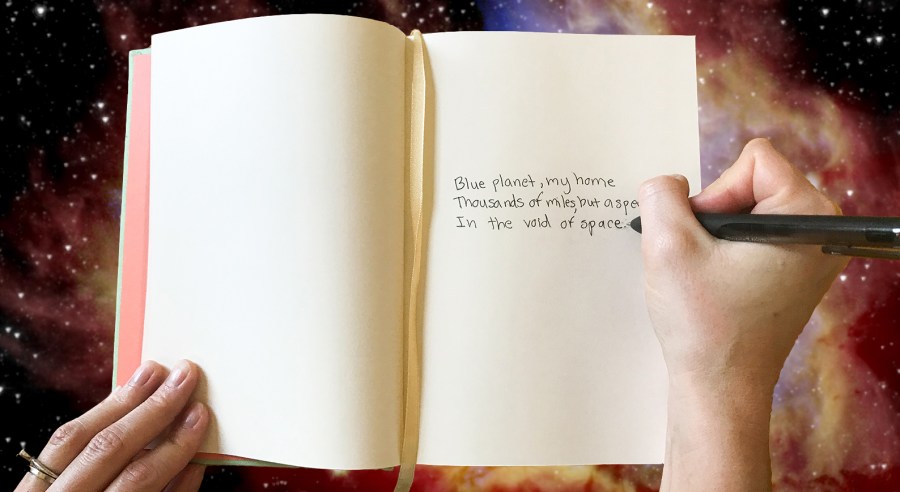
Science verse or logical verse is a particular lovely classification that utilizes science as its subject. Composed by researchers and nonscientists, science artists are for the most part ardent perusers and appreciators of science and “science matters.” Science verse might be found in treasurys, in assortments, in sci-fi magazines that occasionally incorporate verse, in different magazines and diaries. Numerous sci-fi magazines, including on the web magazines, like Unusual Skylines, frequently distribute sci-fi verse, one more type of science verse. Obviously sci-fi verse is a fairly unique class. Online there is the Science Verse Community for those keen on science verse, and for those intrigued by sci-fi verse The Sci-fi Verse Affiliation. Furthermore, there’s Sci-fi Verse Handbook and Extreme Sci-fi Verse Guide, all saw as on the web. Abnormal Skylines has distributed the sci-fi verse of Joanne Merriam, Gary Lehmann and Mike Allen.
Concerning science verse, science or logical writers like sci-fi artists may likewise distribute assortments of verse in practically any elaborate configuration. Science or logical writers, as different artists, should know the “workmanship and specialty” of verse, and science or logical verse shows up in every one of the beautiful structures: free stanza, clear section, metrical, rhymed, unrhymed, conceptual and concrete, ditty, sensational speech, account, expressive, and so forth. Every one of the idyllic gadgets are being used additionally, from similar sounding word usage to punctuation to quip to incongruity and misleading statement, to each beautiful style, metaphors and beat, and so forth. Indeed, even magical logical verse is conceivable. In his collection, The World Depository of Physical science, Cosmology, and Math, supervisor Timothy Ferris suitably incorporates a segment named “The Verse of Science.” Expresses Ferris in the prologue to this part, “Science (or the ‘regular way of thinking’ from which science developed) has long furnished writers with unrefined substance, rousing some to commend logical thoughts and others to respond against them.”
Such greats as Milton, Blake, Wordsworth, Goethe either commended or “abraded” science as well as a blend of both. This went on into the 20th 100 years with so much artists as Marianne Moore, T. S. Eliot, Robinson Jeffers, Robert Ice and Robert Hayden (for example “Full Moon”- – “the splendid challenger of rocket specialists”) also a significant number of the less popular writers, who in any case keep a beautiful reaction to logical issues. Says Ferris, “It is not necessarily the case that researchers ought to attempt to copy writers, or that artists ought to turn converts for science….But they need one another, and the world necessities both.” Remembered for his compilation alongside the best logical exposition/papers are the writers Walt Whitman (“When I Heard the Learn’d Cosmologist”), Gerard Manley Hopkins “(“I’m Similar to a Slip of Comet…”), Emily Dickinson (“Arcturus”), Robinson Jeffers (“Star-Whirls”), Richard Ryan (“Universe”), James Representative Maxwell (“Sub-atomic Development”), John Updike (“Enormous Nerve”), Diane Ackerman (“Space Transport”) and others.
Unquestionably those composing logical verse like those composing sci-fi need not acclaim all of science, but rather science by and by the topic, and there is many times a more prominent connection among verse and science than either writers or potentially researchers concede. Imagination and sentiment can be in both, as can the scholarly and the numerical. Both can be stylish and intelligent. Or on the other hand both can be nonaesthetic and nonlogical, contingent upon the kind of science and the sort of verse.
Science verse takes it subject from logical estimations to logical images to time and space to science to science to physical science to cosmology to geology/geography to meteorology to ecological science to software engineering to designing/specialized science. It might likewise take its subject from researchers themselves, from Brahmagypta to Einstein, from Galileo to Annie Gun. It might address explicit sorts of researchers overall as Goethe “Pretty much: To the Physicist” in the Ferris collection. (Ensuing writers referenced are additionally from this collection.)
Science verse might utilize many structures or any structure from expressive to story to piece to emotional discourse to free section to light stanza to haiku to villanelle, from verse for youngsters or grown-ups or both, for the researcher for the nonscientist or both. John Frederick Nims has composed for instance, “The Observatory Tribute.” (“The Universe: We might want to comprehend.”) There are sonnets that rhyme, sonnets that don’t rhythme. There’s “substantial verse” like Annie Dillard’s “The Breezy Planet” wherein the sonnet in looking like a planet, from “shaft” to “post,” an imaginative sonnet. “Mayhem Hypothesis” even turns into the subject of verse as in Wallace Stevens’ “The Specialist of Disarray.”
Also, what of your science or potentially logical sonnet? Consider every one of the strategies of verse and every one of the methods of science. What perspective would it be a good idea for you to utilize? Third individual? First individual, an emotional discourse? Does a star talk? Or on the other hand the actual universe? Does a sound wave talk? Or on the other hand a micrometer? Could you at any point exemplify radio cosmology?
 Edu Buzz